
Whitepaper

Is Your Data Stack One Vendor Failure Away from Crisis?

The average enterprise uses 3-7 data vendors but can’t quantify the risk. This vendor risk assessment framework helps you assess dependencies and decide with confidence.
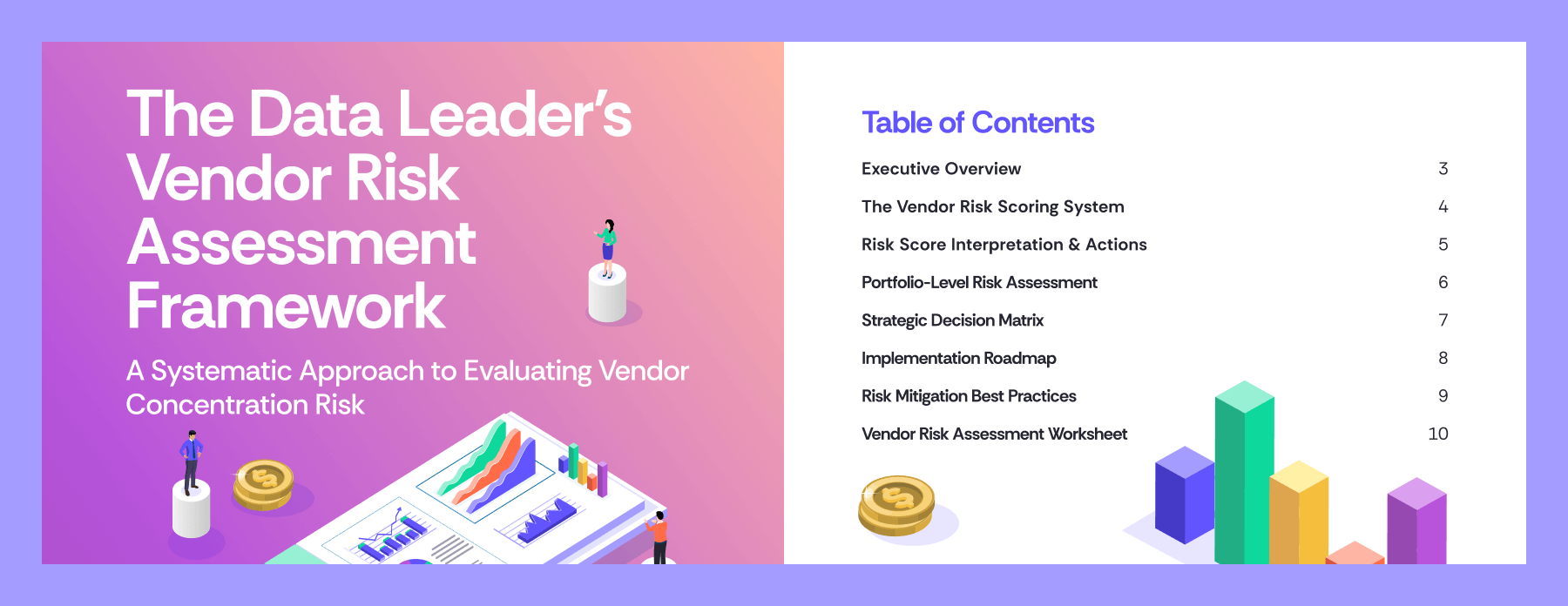
Nexla Whitepaper: The Data Leader's Vendor Risk Assessment Framework

What's Inside the Vendor Risk Assessment Framework?

Vendor consolidation promises simplicity. But what happens when that single vendor changes pricing, gets acquired, or experiences an outage? This vendor risk assessment framework helps Chief Data Officers, VPs of Data Engineering, and data platform leaders at enterprise companies systematically evaluate vendor lock-in risk, data platform dependencies, and migration costs across their entire data infrastructure.

Score Your Vendor Risk in 5 Minutes

A simple 5-dimension scoring system that quantifies dependency, migration cost, alternative options, and more across every vendor in your stack

Identify Your Single Points of Failure

Portfolio-level metrics that reveal dangerous concentration risks before they become crises

Make Consolidate vs. Diversify Decisions with Confidence

A strategic decision matrix that tells you exactly when to consolidate vendors and when to diversify based on your risk profile

Know When to Act on Vendor Risk

Clear risk score thresholds that tell you whether to monitor, plan, pilot, or immediately migrate away from a vendor

Build a Practical Migration Roadmap

Quarter-by-quarter implementation plan for reducing vendor risk without disrupting operations

Protect Yourself Contractually

Specific contract clauses and negotiation tactics that reduce lock-in and preserve optionality

Why Do Data Leaders Need This Framework?

Stop guessing about vendor risk and start measuring it with quantifiable scores that stand up to executive scrutiny. With major consolidation like Fivetran-dbt increasing vendor concentration across the industry, this framework helps you avoid expensive lock-in mistakes, negotiate from a position of strength, and build the architectural resilience that top data teams use to maintain platform independence.