What is context engineering in enterprise AI? Context engineering is the discipline of designing the runtime context AI agents use to make decisions in enterprise AI systems. It combines the right data sources, semantic intelligence, permission-aware access, and real-time delivery so agents receive accurate, traceable information during production workflows.
Introduction
Your data platform was designed for humans. Without context, it can’t serve agents.
Enterprise teams are adopting GenAI quickly, but nearly two-thirds still struggle to move beyond pilots. Agents are a big reason why!
Agents don’t fail because they can’t write. They fail because the context they use at decision time is incomplete, outdated, conflicting, or shared with the wrong people. Context engineering fixes this by pulling the right information for each step, keeping it fresh, access-aware, and easy to review. So agents stop guessing and work reliably in production.
This article explains context engineering, why prompts and pipelines aren’t enough for agents, and how Nexla helps deliver reliable runtime context at scale.
What is Context Engineering
Context engineering is about building the right runtime context for AI, using the right sources, the latest facts, and permission-aware access, so outputs are accurate and reviewable. It designs what AI consumes at runtime, so the next step is correct and defensible, not just fluent.
In enterprises, “context” is more than text in a prompt. It includes:
- Coverage: Which sources are in scope for this decision?
- Meaning: Consistent definitions and entity identity, i.e., semantic consistency, across systems.
- Freshness: What version applies today?
- Access Boundaries: What a particular user can see and do?
- Traceability: What evidence backed the decision?
- Auditability: A clear record of what was used, when, and why.
Here’s a simple example. Ask an agent for “the refund policy”, and it may pull a generic page and make the wrong call. A context-engineered request ties it to a specific customer, the governing contract, the effective date, and the user’s access rights.
That’s the gap between an agent that sounds helpful and an agent you can trust in production.
Why Data Engineering or Prompt Engineering isn’t Enough
Data engineering and prompt engineering solve different parts of the problem, but agents fail when they must act.
Data engineering can ingest the rate card from finance, negotiated terms from sales, and eligibility rules from policy docs. It makes data available, but it does not ensure that the agent uses the correct version, follows the right overrides, or stays within access rules.
Prompt engineering can shape instructions and produce a clear quote, but it cannot fix missing, stale, or conflicting inputs.
Context engineering bridges the gap at runtime. It builds the decision context for each step by tying retrieval to the specific customer, contract, date, and user permissions. It pulls only what applies, applies precedence, and logs what was used so the action is consistent and reviewable.
Four Ways Index-First RAG Fails in Production
| Aspect |
Data Engineering |
Prompt Engineering |
Context Engineering |
| Main goal |
Moves/transforms data |
Improves instructions/outputs |
Delivers correct runtime context |
| Primary input |
Sources → pipelines |
Prompt + examples |
Scope + metadata + permissions + freshness |
| Common failure |
The right data exists, but the wrong slice was used |
Great tone, wrong facts |
Stale/conflicting/permission-blind context |
| Success metric |
Reliable delivery |
Helpful outputs |
Correct, reviewable decisions |
So what does “runtime context” actually look like in enterprise systems? To move beyond guessing to knowing, a common approach is context graphs.
Where Context Graphs Fit and Where They Break
Context graphs help structure relationships that agents care about: a customer belongs to an account, a contract overrides a default policy, and a ticket references an incident timeline. That relationship structure supports better reasoning than “documents in a pile.”
But graphs alone don’t solve the runtime context. Coverage across systems may still be missing. Content can still go stale. Permissions may still be ignored at retrieval time. Conflicts (exceptions, overrides, regional rules) may still be unresolved.
While context graphs strengthen semantic structure, context engineering makes the full runtime package usable. It makes it complete and current, permission-aware, and auditable.
The Three Layers of Context Engineering
1. Data Variety
Enterprise context is scattered by design. The inputs an agent needs for a single decision rarely reside in a single system. Policies may be documented, included in customer terms in a CRM, or handled as edge cases in tickets or approvals.
That’s why agents can’t rely on a single system of record. They need coverage that matches the decision. If a required source is missing, the agent will still answer, but from an incomplete view.
For example, a refund decision might depend on the written policy, a contract override, and an approved exception recorded in a ticket. If the agent retrieves only the policy, it can deny a valid refund.
Data variety is not “ingest everything.” It means defining which sources are in scope for this step. Make that scope explicit so retrieval stays predictable and errors stay traceable.
2. Semantic Intelligence
Once you have the right sources, meaning still breaks agents.
Different systems name the same thing differently. IDs drift. “Customer,” “account,” and “tenant” are used interchangeably. Policies exist in multiple versions.
Product terms vary by region. Retrieval can return “relevant” text and still be wrong if semantics don’t align.
Semantic intelligence standardizes meaning, ensuring runtime context remains consistent across steps. In practice, that usually includes:
- Entity normalization: It means matching the same real-world customer, account, or product across systems so the agent doesn’t have to guess. It helps prevent conflicts when different tools use different names or IDs for the same thing.
- Stable identifiers: IDs or links that remain valid even after migrations, merges, or system changes. They help keep references intact so joins do not break, and the agent can reliably follow relationships over time.
- Retrieval-grade metadata: Represents structured information attached to content, such as owner, effective date, version, region, sensitivity, and product line. It helps by allowing the retrieval filter to focus on what is current and in scope, rather than relying solely on similarity.
- Packaging: Involves delivering knowledge as a reusable unit that includes its content, scope, and rules, rather than raw text chunks. It helps by making the retrieved context self-contained, easier to apply correctly, and faster to review.
Graphs can help connect entities, but semantic intelligence also encodes authority and precedence: what overrides what, and how conflicts are resolved.
3. Real-Time Delivery
Even perfectly modeled semantics fail if the agent is fed stale context.
Agents run in steps. Each step can change what should be retrieved next: the user clarifies the region, the agent discovers the contract start date, a case escalates, and permissions change. Context must be assembled per step, not as a one-time dump.
Real-time delivery means:
- Setting clear freshness expectations, so some context updates in minutes, while other contexts can refresh daily
- Using permission-aware retrieval and safe fallbacks when the needed context is missing
- Keeping an audit trail of what was retrieved and what the agent used at each step
- Having rollback options so you can quarantine or revert context when a source changes unexpectedly.
This is what turns “answers” into “decisions you can defend.”
Checklist: What to Implement First
Context engineering becomes manageable when you start with one workflow:
- Pick one workflow and define decision points (refund approval, pricing eligibility, onboarding verification).
- List the required context sources for each decision and assign an owner to each source.
- Set freshness expectations and update triggers (what changes, how often, what breaks).
- Enforce permission boundaries (RBAC, sensitivity tags, contract scope).
- Capture traceability: what was retrieved, when, and why it was eligible.
- Define an approval loop for exceptions and overrides so the system evolves safely.
If you can do this for one workflow, you can scale it across many.
How Nexla Enables Context Engineering at Scale
Context engineering requires a structure that travels with the data.
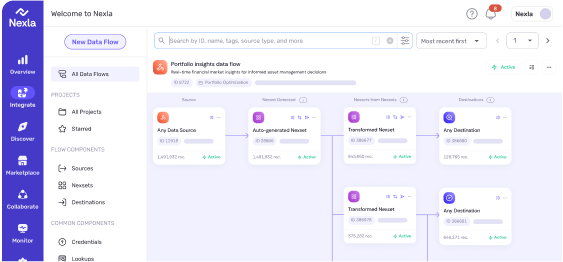
Nexla supports this by packaging governed context as reusable data products. With Nexsets, teams can standardize context so downstream consumers, including agents, see a consistent shape regardless of source format, while controls and metadata move with the asset.
At runtime, orchestration matters as much as retrieval. Agents need reliable delivery patterns, permission-aware access, and traceability across tool calls. Those execution gaps are clear in Nexla’s view of enterprise MCP orchestration and runtime execution.
The goal is straightforward: consistent context, the right access boundaries, and fewer production surprises.
Conclusion
Prompts won’t fix missing context, and bigger models won’t fix fragmented inputs. Context engineering is the reliability layer that makes enterprise agents dependable in real workflows.
If you’re building agents that must act in production, start by engineering a runtime context: define scope, standardize meaning, deliver fresh permission-aware context per step, and log what happened.
Want to see context engineering in action?
Schedule a demo to see this in practice, and explore how governed data products and agent-ready delivery turn fragmented enterprise data into a reliable runtime context for production agents.
FAQs
What problem does context engineering solve?
It prevents agents from making calls based on partial or outdated information by assembling the exact materials needed for that step and linking them to the correct customer policy date and access level.
What does a good runtime context look like?
A small decision packet that includes the facts that matter, the rule that applies to any approved exception, and a link back to where each detail came from.
How do you keep context from drifting over time?
Version the source, run a few known checks on retrieval, watch for upstream changes, and keep a quick rollback path when policies, schemas, or permissions shift.
Why do enterprise AI agents fail without context engineering?
Enterprise AI agents often fail because they rely on incomplete, outdated, or conflicting information. Context engineering ensures agents retrieve the correct data for each step while enforcing permissions, freshness, and traceability.
How is context engineering different from prompt engineering?
Prompt engineering focuses on improving how instructions are written for AI models. Context engineering focuses on assembling the correct runtime information the AI needs to make accurate decisions.
How is context engineering different from data engineering?
Data engineering moves and transforms data into pipelines and storage systems. Context engineering assembles the specific data, metadata, permissions, and freshness required for each AI decision at runtime.

 Express —