
MCP Server & Gateway

The Governed MCP Gateway Between Your Enterprise Data and Your AI Agents

Nexla MCP Server & Gateway is the policy-enforcing, context-routing layer that connects any enterprise data source to any MCP-compatible AI agent. Every tool call is routed, permissioned, and governed before data reaches the agent.
Governed Data Flow for AI Agents

How It Fits In The Architecture

Actions and writes flow back through the same path.

The MCP Server & Gateway sits at the delivery point. It receives MCP Tool calls from agents, routes them through the appropriate data pipelines, enforces access policies, and returns governed, context-enriched responses.

Animated pipeline: Sources to Connectors to Probe to Nexsets to Sync API to the MCP Server and Gateway to AI Agents, grouped into Ingest, Discover and govern, and Serve

Three Core Functions

Number One

Context

The Gateway connects to Nexla’s Context Engine (Helix), which grounds each MCP tool call in enterprise-specific knowledge: schemas, lineage, prior executions, and business documentation. Agents receive data they can reason over, not just raw records.

Number Two

Router

The Gateway routes each tool call to the correct Nexset and Sync API endpoint. For cross-system workflows, it orchestrates multiple hops in a single execution, managing auth, rate limits, and retries per system.

Number Three

Policy

Every tool call passes through the full MCP Security & Governance layer before data is returned.

MCP Security & Governance

Every Tool Call Passes Through Every Layer

Six layers are enforced at the gateway before data reaches an agent. Select a layer to see what it controls.


Enforced on every tool call
Layer 01 of 06

Identity

What it governs

Agent and user authentication.

From Data To MCP Tools

MCP Tool Creation Flow

Every MCP tool available through the Gateway is created from a governed Nexset via Sync API:

Integrate Anything
Connector
Ingests data from a source system (1000+ supported)
Nexla Artificial Intelligence (AI)
Agentic Probe
Discovers and profiles the source
Nexla Nexset
Data Product (Nexset)
Is created as a governed virtual data product (schema, docs, access control)
API Integration
Sync API
Exposes the Nexset as a Data API (GET /data) or API Service (POST /action)
MCP Hub
MCP Gateway
Publishes the API as an MCP Tool or MCP Action, discoverable by agents
Delivered Value

What Agents Get

Any MCP-compatible agent or orchestrator connecting through the Nexla MCP Gateway receives:

Fast, Speed
MCP Tools sourced from 1000+ enterprise data systems
Nexla Transforms
Schema-aware, semantically enriched data (not raw column names)
Magnifying Glass Icon
Context-grounded responses via the Helix Context Engine
Nexla: Secure and Trusted
Governed read and write access with full audit trail
icn-compare
Cross-system orchestration in a single tool call

Compatible with LangChain, LangGraph, CrewAI, AutoGen, Anthropic Claude (native MCP), and any framework implementing the open MCP specification.

Governance By Design

Security & Governance

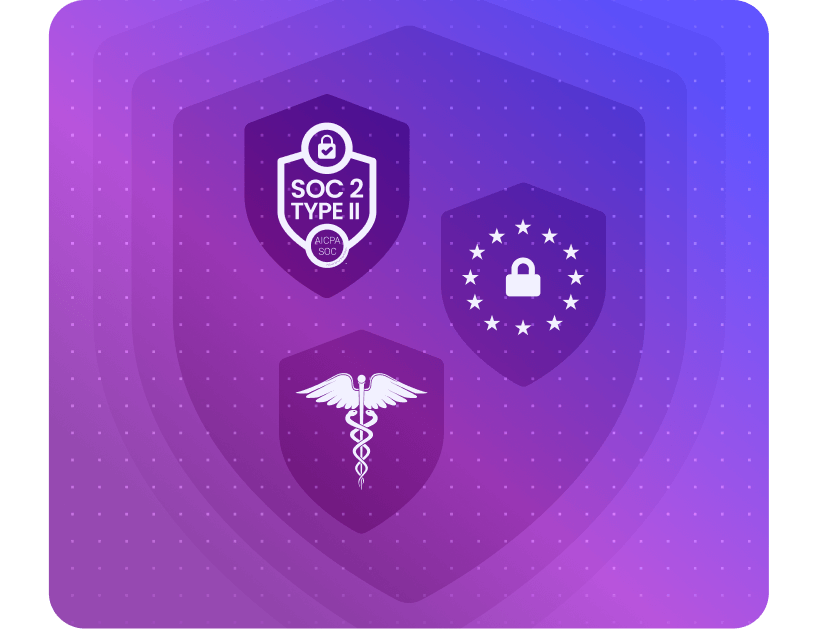
Nexla is SOC 2 Type II certified. The MCP Gateway enforces governance at every layer:

  • RBAC at dataset, row, and column level
  • Field masking for PII and sensitive columns
  • Full audit log: every tool call logged with agent identity, timestamp, and query
  • End-to-end data lineage for all data accessed via MCP
  • VPC and on-premise deployment options for sensitive environments
Nexla: Security You Can Trust at Scale

Governed Data Access for Every AI Agent in Your Stack.

Frequently Asked Questions

What is Model Context Protocol (MCP) and why does it matter for AI agents?

MCP (Model Context Protocol) is a standardized way to connect AI agents like ChatGPT, Claude, and Copilot to external data sources, tools, and workflows. It enables AI agents to access enterprise data, execute tasks, and provide personalized insights without custom API integrations for each connection.

Why is MCP important for AI orchestration?

MCP standardizes how AI agents access data and tools across systems, enabling multi-agent workflows. Nexla adds the governance MCP lacks: every tool call is grounded in Helix context, permissioned by policy, and logged. Agents get task-specific tools from 1,000+ systems, and teams build pipelines in natural language with Express.dev.

How does Nexla's MCP server differ from vendor-specific MCP servers?

Vendor MCP servers expose every tool for a single app with no business context. Nexla serves governed, task-specific tools from 1,000+ systems, grounded in Helix context and enforced by a six-layer security stack. In Nexla benchmarks, task-specific servers used up to 32.7x fewer tokens and 4.7x fewer tool calls, with equal or better accuracy.

What is Express MCP and how does it enable AI agents to build data pipelines?

Express MCP is the only MCP server that lets AI agents BUILD data pipelines, not just query data. Using natural language commands like “Connect Salesforce to Snowflake and sync hourly,” AI agents create production pipelines with automatic schema mapping, transformations, and governance. Available now in ChatGPT GPT Store.

How does Nexla MCP ensure enterprise-grade security and governance?

Every tool call passes a six-layer security and governance stack, starting with verified identity (OAuth 2.0 and Keycloak). Controls include RBAC at dataset, row, and column level, PII masking, rate limiting, HTTPS-only traffic, and a full audit log. Nexla is SOC 2 Type II, ISO 27001, HIPAA, GDPR, and CCPA compliant, with cloud, VPC, on-premises, or hybrid deployment.

Can Nexla MCP connect AI agents to legacy systems without native MCP support?

Yes, Nexla MCP dynamically creates MCP endpoints for ANY system, including SAP, Siebel, mainframes, and proprietary databases, even when those systems lack native MCP support. This enables AI agents to access legacy enterprise data through standardized MCP protocol with full governance and audit trails.