Insights from our AWS re:invent 2023 session with data leaders in asset management
The financial services industry, particularly in asset management, is undergoing a transformation fueled by the modernization of data architecture. Driven by the need for better ways to work with unstructured and complex data at scale, leading asset management companies are adopting and using data products to drive innovation. We sat down with some of those leaders to learn more about how data products are at the center of their new data initiatives at the recent AWS re:Invent 2023.
In the session, Darrel Cherry, Clearwater Analytics Chief Architect, and Chitra Hota, Oaktree Capital Management CTO delved into the challenges and solutions in the complex ecosystem of asset management, highlighting the critical role of data architecture in driving operational efficiency and making billion-dollar decisions.
Key Takeaways
Unstructured Data
Asset management grapples with a significant volume of unstructured data, including PDFs, text files, and Excel sheets. Integrating this diverse data with traditional sources poses a considerable challenge.
The Role of Data Products
Data Architecture Simplified: The architecture must be simple, flexible, and capable of processing both structured and unstructured data.
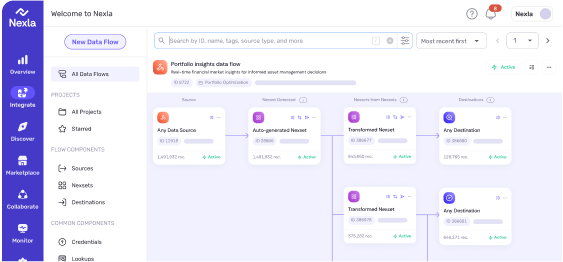
Data Products as Enablers: Data products play a crucial role in facilitating easy data transformation, offering a variety of adapters, connecting to multiple sources, and reducing time to market.
Generative AI in Asset Management
Handling Voice and Unstructured Data: The use of large language models (LLMs) and generative AI is transforming how asset management deals with voice data and unstructured formats like PDFs. The code interpreter is employed to interrogate PDFs, providing valuable insights
Applications and Benefits: The panelists shared practical applications, including an earnings calls transcriber automating summarization, sentiment analysis, and named entity recognition. Exploration of quarterly reports, law notices, and bankruptcy notices in PDFs to enhance investment decision-making.
Impact on Investors: The advent of generative AI is making investors more savvy. They can access information quickly, gaining insights into market events, asset changes, and receiving suggestions for actions
Technology Stack: The experts discussed their use of various AWS technologies, including Transcribe, Textract, Glue, Lambda, and more. Nexla’s role in handling diverse data sources was emphasized, providing flexibility and scalability.
In conclusion, the session highlighted how modernizing data architecture with data products is pivotal in navigating the intricate landscape of asset management, offering insights, efficiency, and agility. Nexla offers a game-changing solution to working with all the complexities of modern data like unstructured data at scale to drive key use cases like Generative AI, data integration, and more.

 Express —